
Sew Smarter, Starting Now
Better sewing doesn’t always come from learning a complicated new technique. Often, it’s the small things you do as you work that make the biggest difference.
How you handle your fabric, how accurately you cut, or when you reach for a stabiliser can make sewing easier and help prevent problems before they happen.
Here are some simple techniques you can start using straight away.
Keep all of your fabric on the cutting table
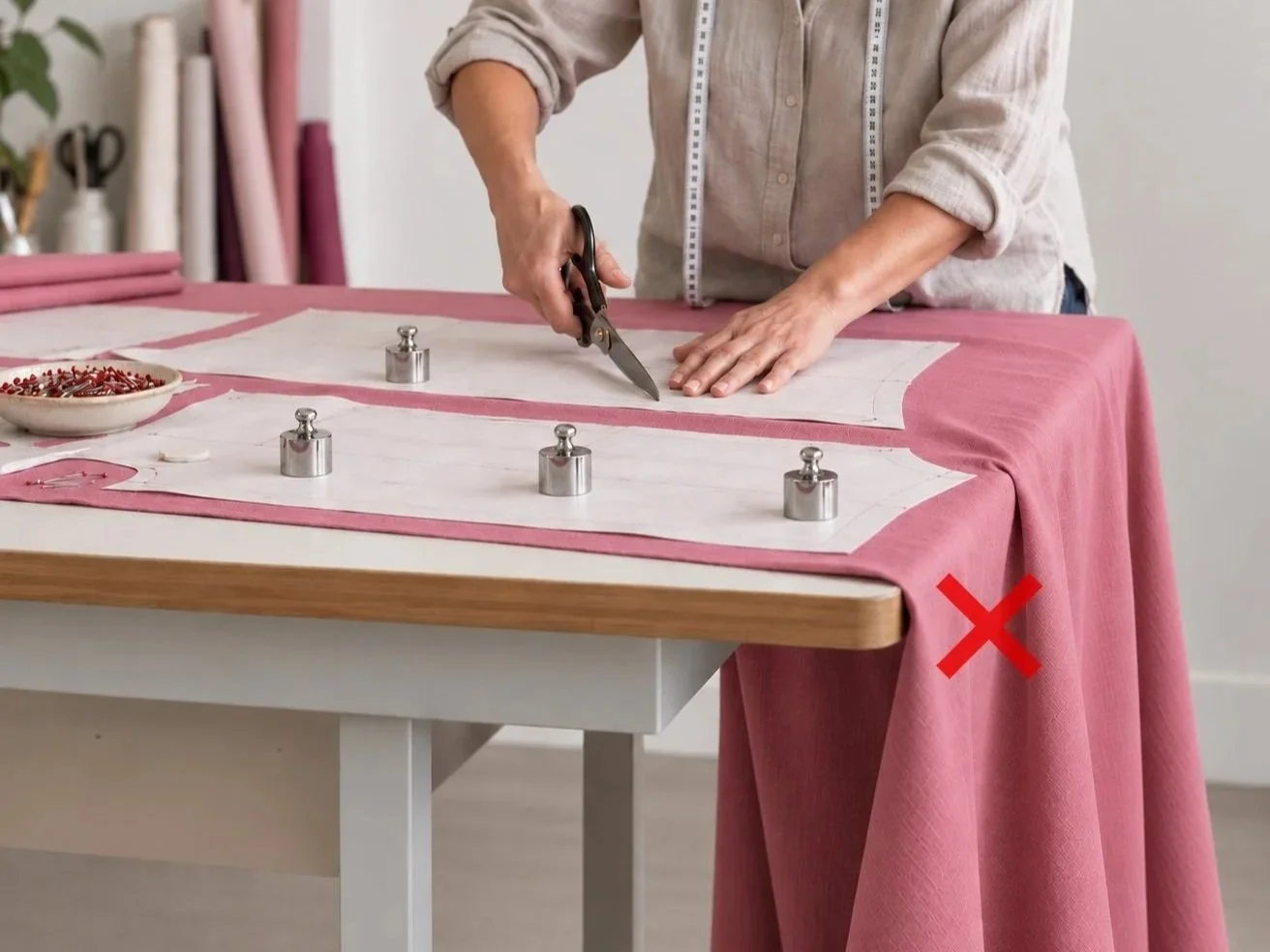
Never let your fabric hang over the edge of your cutting table. Its weight can pull it out of shape and distort the grain before you’ve even made the first cut. Keep the full length supported on the table as you lay out and cut.
Accuracy down to the millimetre counts
A few millimetres might not seem like much, but small cutting inaccuracies across multiple pattern pieces can quickly add up. Keep the lower blade of your shears resting on the cutting table and use long, smooth cuts, rather than lifting the fabric or taking short, choppy snips. Cut cleanly and consistently to the cutting line so adjoining pieces meet as they should.
Staystitch before your fabric moves
Necklines, waistlines and other curved or bias edges can stretch out of shape simply through the gentlest handling. Staystitch them soon after cutting, before repeated handling has a chance to distort them.
Try this before tearing your hair out
Fine, fluid fabrics can stretch and distort once cut, as well as slip or get pulled into the machine as you sew. Lightweight tear-away stabiliser (vilene) hand-basted to cut garment pieces helps the fabric to retain its correct shape and supports it as it feeds through the machine. When the stitching is finished, simply tear it away.
Clip to release, notch to reduce
Clip into concave curves so the seam allowance can spread; notch convex curves to remove excess bulk. On two-layer seams, stagger your clips and notches so they don’t sit directly on top of each other. It’s a small step that makes a huge difference to how smoothly and cleanly your curves sit when turned and pressed.
Press seams before you press them open
Before opening a seam, press along the stitching line on both sides while the seam is still closed. This sets the stitches into the fabric and helps remove any tiny puckers. Then press the seam open — and you’ll get a smoother, cleaner seam.
When pressing, cooling is as important as heat
Heat and steam soften and reshape the fibres. Cooling sets that shape. Move the fabric while it’s still warm and you can undo the work you’ve just done. Leave the piece undisturbed until it’s cool and dry — particularly when pressing curves, darts and shaped areas.
Small changes, good habits and a little know-how can make sewing so much easier.
Give these a try on your next project.